Hotel Photos: Why Real Beats AI-Generated Every Time
An AI-generated hotel room in a few seconds, versus several hours of retouching on a real photo shot on site: the choice looks obvious on paper, but it changes everything for guest trust. As AI-generated imagery spreads across hospitality, a recent study found that one in five hotel photos on booking platforms already shows signs of AI manipulation. Here is why BMAX studio keeps betting on authentic photo retouching, through a recent shoot for the Kyriad hotel.
In this article:
- Why AI-generated photos tempt so many properties
- What traveler trust studies actually show
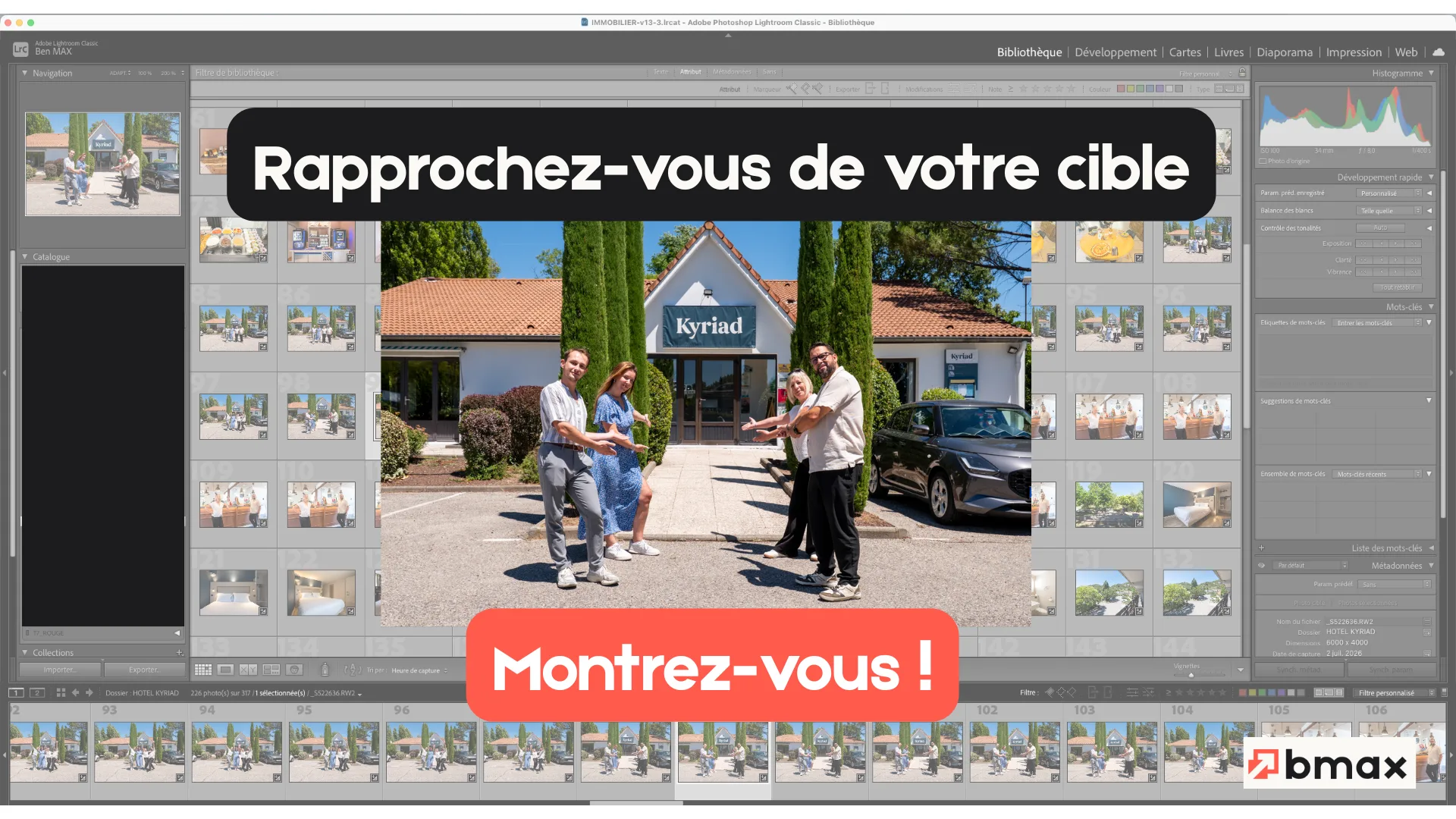
- The Kyriad hotel photo and video shoot, in practice
- Showing up as you really are: the strategy that brings a brand closer to its guests
- Spotting AI photos, upcoming regulation: your questions
- A head start on trust, and on regulation
Why AI-generated photos tempt so many properties
Generating a room photo with AI takes seconds and costs almost nothing, against several hours of shooting and professional photo reportage. On paper, the equation looks simple: less time, less budget, a clean-looking result.
The problem shows up once the booking is confirmed. An AI-generated room often exaggerates wide-angle effects, artificially enlarges the space, and smooths out details that no longer match what the guest saw when booking.
What traveler trust studies actually show
About one in five hotel photos shown on booking platforms today shows signs of AI manipulation, according to a study relayed by Hotel News Resource (2025). In some cities, that share goes above a third of published images.
This trend has a direct cost on trust. 70% of travelers say they trust imagery more when its authenticity is confirmed, and 98% of consumers consider authentic visuals essential to building trust with a brand, according to a Getty Images study relayed by La Réclame (2025).
The Kyriad hotel photo and video shoot, in practice
During the photo and video reportage for the Kyriad hotel, every image goes through careful retouching: correcting the room’s natural light, respecting real proportions, and highlighting details that genuinely exist on site. Nothing is added, nothing is artificially enlarged.
That retouching time, invisible to the guest, is exactly what turns a decent photo into one that reassures and drives direct bookings instead of relying on a third-party platform. The same approach shaped our photo reportage for countryside gites in Provence, where authentic visuals directly supported direct bookings.
| Criteria | AI-generated photo | Real photo retouched by BMAX |
|---|---|---|
| Accuracy to the real room | Often distorted (wide-angle, proportions) | Accurate, verified on site |
| Traveler trust | Declining (1 in 5 photos suspected AI) | Reinforced by authenticity |
| Regulatory compliance | Mandatory labeling from August 2026 (EU) | No labeling required |
| Risk on guest arrival | Possible mismatch, disappointment | Accurate match |
Showing up as you really are: the strategy that brings a brand closer to its guests
Showing up as you really are is not just about room photos. It also applies to your team, the behind-the-scenes of a shoot, the retouching process itself: all of it brings a brand closer to its clients and builds reassurance before the booking even happens, whether for a hotel, a campsite, or a gite.
This approach matters even more with the EU AI Act coming into force. From August 2, 2026, AI-generated or heavily AI-edited images will require mandatory labeling on booking platforms. Properties already betting on authentic visuals will have nothing to change.
Spotting AI photos, upcoming regulation: your questions
How can I spot an AI-generated hotel photo?
Common signs include room proportions that look too large, exaggerated wide-angle distortion, unnaturally smooth light or texture, and details that repeat inconsistently. When in doubt, comparing several photos of the same room across different platforms helps reveal inconsistencies.
Will AI be banned from hotel photography?
No, but the EU AI Act will require mandatory labeling of AI-generated or heavily AI-edited images on booking platforms starting August 2, 2026. Properties that already use authentic photos will not need to take any action.
How long does retouching a hotel photo shoot take?
For a full reportage, BMAX typically spends several hours retouching each batch of photos, depending on the number of rooms and spaces covered. That time goes into correcting light and color, never into distorting the property’s real proportions.
A head start on trust, and on regulation
A hotel that chooses to show up as it really is gets ahead, both on guest trust and on upcoming regulation. Authentic retouching is not a technical constraint, it is a genuine sales argument.
Une version française de cet article est disponible :
Photos IA ou vraies photos : ce qui fait réserver un hôtel
Running a hotel, campsite, or gite and want visuals that truly represent you?
Let’s talk for 30 minutes –
BMAX supports accommodation businesses across the Alpes de Haute-Provence and PACA region with their digital communication.