corporate video for a solar installer : it is the single most effective way to build trust and stand out in a saturated market. The solar market has exploded in France over the past three years. The downside: serious installers now compete with cold-callers who erode customer trust. For a locally rooted SME, showing the real craft becomes decisive. This is exactly where a presentation video earns its place. This article explains why, how, and illustrates with a real case shot in southern France for A2C ENR.
In this article:
- Why video has reshaped the game for renewable energy installers
- What a corporate video should show (and what it should avoid)
- The A2C ENR case: one shoot, two regions, two formats
- How long does this kind of video take?
- Which formats matter in 2026?
- What the video actually changes for an installer
Why video has reshaped the game for renewable energy installers
A clean website and a few Google reviews are no longer enough. A homeowner about to sign a multi-thousand-euro quote wants to see: see the owner’s face, see a team on a roof, see how it actually works. Video meets that need for reassurance in a way no photo or text can replicate.
In the renewable energy sector, the stakes are even higher. The customer first wants to rule out a scam. A well-produced video, showing real installations and a manager who speaks plainly about his trade, drops that barrier within seconds.
What a corporate video should show (and what it should avoid)
A useful presentation video for a solar installer typically shows:
- The owner explaining his approach, no scripted recital
- Teams at work on a real installation
- Concrete steps: mounting, wiring, commissioning, monitoring
- One or two drone shots that give a sense of scale
What it should avoid: stock footage, corporate voiceovers that sound like early-2000s commercials, and sales claims disconnected from the field. Customers spot them in two seconds.
The A2C ENR case: one shoot, two regions, two formats
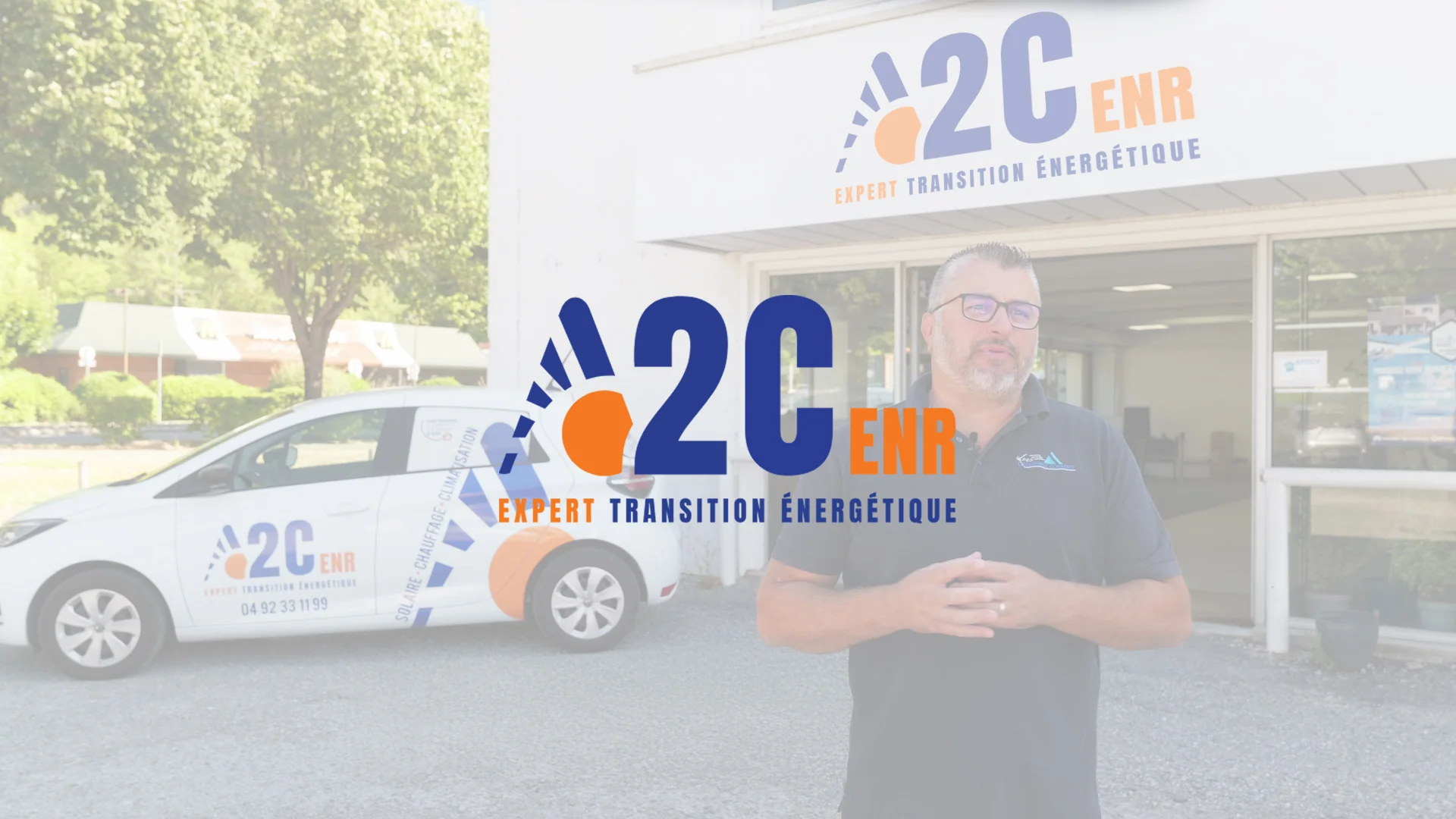
A2C ENR is a heating company based in the Alpes-de-Haute-Provence, with a dedicated branch for photovoltaic installation and smart energy management. The brief: produce a video presenting that new offer, for both their website and their social media.
How it played out: a one-day shoot starting in Digne-les-Bains for the manager’s interview, then a 90-minute drive to an active installation in the Hautes-Alpes. Ground footage, drone shots, natural-light interview, install sequences.
Two deliverables came out of post-production:
- A horizontal 16:9 cut for the website and LinkedIn
- A vertical 9:16 cut for Instagram and Facebook
This multi-format logic is no longer optional. Shoot once, deliver two versions matched to actual usage, that’s how you actually get value out of a video budget today.
See the full project: A2C ENR – photovoltaic section presentation video.
How long does this kind of video take?
For an SME, a realistic timeline breaks down into four steps:
- Brief and scouting: 1 to 2 weeks before the shoot
- Shoot day: 1 day for a presentation video like A2C ENR’s
- Editing and revisions: 2 to 3 weeks
- Multi-format delivery: all at once
The classic trap: underestimating client-side validation time. The sharper the initial brief, the fewer revision rounds.
Which formats matter in 2026?
Simple rule: shoot once, edit several times.
- Horizontal 16:9, 1 to 3 minutes: website and LinkedIn
- Vertical 9:16, 30 to 60 seconds: Instagram, Facebook, TikTok, YouTube Shorts
- Square 1:1, optional: mixed social placements
Posting a single 16:9 video as-is on Instagram is the most common mistake. The algorithm ignores it and it is unreadable on mobile.
What the video actually changes for an installer
For a solar installer, a presentation video is no longer a “nice to have”: it is what lets you stand apart from cold-callers and convince a sceptical homeowner within seconds. The A2C ENR case shows that one well-prepared shoot day, exploited in multi-format, is enough to fuel a website and social channels for several months.
Une version française de cet article est disponible : Vidéo de présentation pour installateur photovoltaïque
Considering a presentation video for your business in southern France?
Let us talk for 30 minutes – BMAX Studio works with local SMEs, from solar installers to hotels, on their audiovisual communication.