AI Overviews: Google confirmed to French press publishers on 29 June 2026 that these AI-generated summaries at the top of search results will arrive in France by 23 September 2026 at the latest. For an independent hotel, campsite, or gîte in Provence, that changes part of the game, the moment when a future guest types a question into Google before ever reaching your website or your Booking listing. Here is what will actually change, and how to prepare before every competitor does the same.
In this article:
- What AI Overviews are, and why France is only getting them now
- What changes for your guests’ searches
- The real risk: fewer clicks, but more qualified visitors
- How to prepare your property before 23 September
- Opt-out, traffic, actions: your AI Overviews questions
- Prepare now, while France still has nothing live
What AI Overviews are, and why France is only getting them now
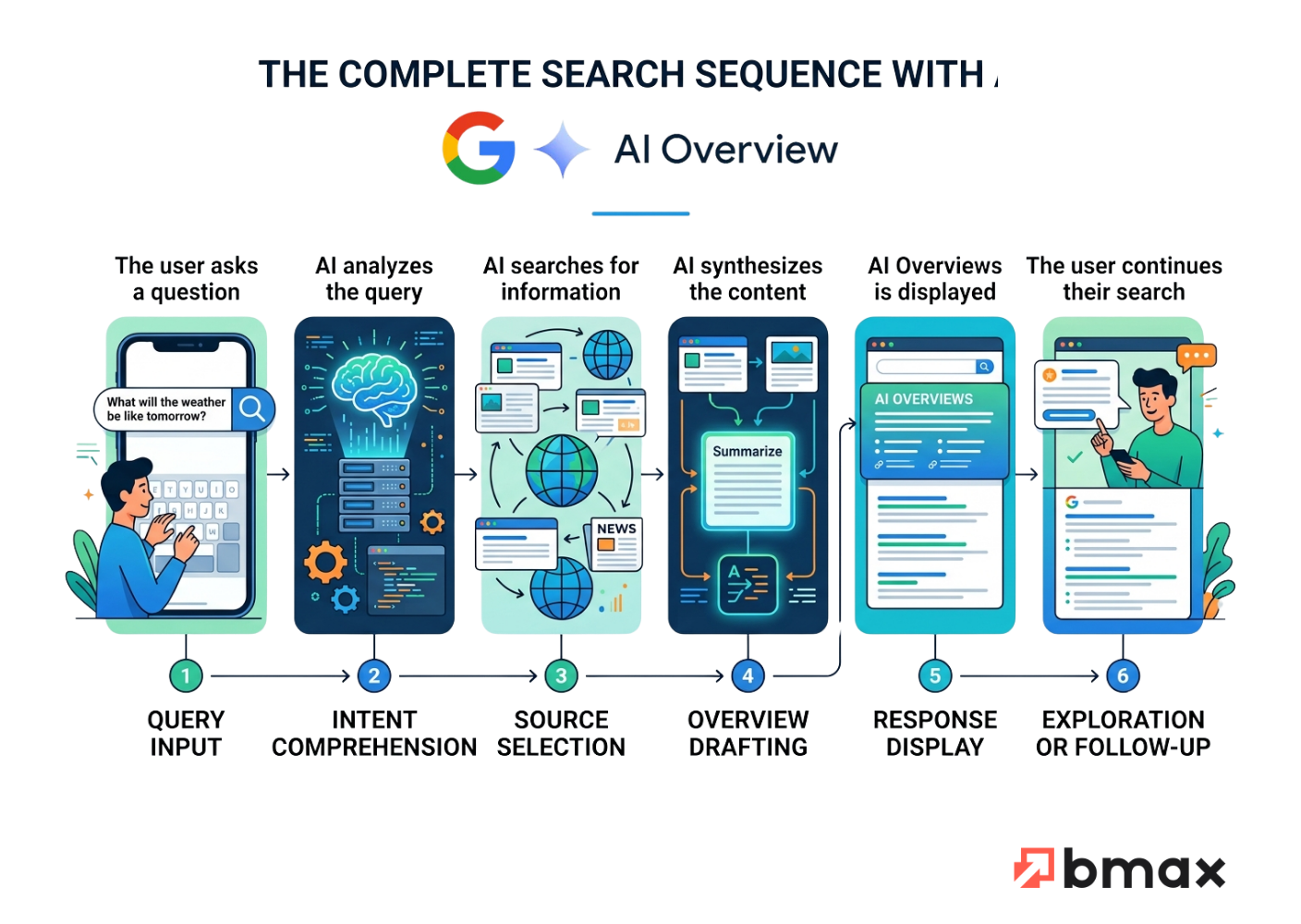
AI Overviews display an AI-generated summary, powered by Gemini, at the top of Google search results, along with links to the sources used. A related feature, AI Mode, adds a conversational search experience where you refine your question through a back-and-forth exchange. Both have existed in more than 120 countries for two years already: France is one of the last major markets to get them, held back by the European regulatory framework (the Digital Markets Act) and the question of press neighbouring rights.
In its 29 June letter to publishers, Google made three commitments: the ability for each outlet to choose whether or not to appear in AI results, transparency on the number of impressions generated, and compensation under neighbouring rights for eligible publishers. Those commitments target the press first, but the underlying question, whether or not you get cited in an AI summary, matters for any business that depends on local search.
What changes for your guests’ searches
Take a typical search from a future guest: “hotel with spa near Digne-les-Bains” or “family campsite in Provence with a pool”. Today, Google shows a list of organic results and, sometimes, a pack of Google Business Profile listings. Soon, an AI summary may sit above all of that, citing two or three properties before the visitor even scrolls.
The technical mechanism behind AI Mode is called query fan-out: Google breaks a complex query into several sub-questions processed in parallel (location, amenities, reviews, price) to build a more complete answer. The selection criteria for the properties featured stay the same as in classic search, though: quality content that carries real authority on its topic. No magic tag replaces a well-built site and an up-to-date listing.
The real risk: fewer clicks, but more qualified visitors
Data from countries that already have AI Overviews isn’t reassuring on traffic volume. Pew Research Center found that only 8% of users click through to a result when an AI summary appears, compared with 15% in classic search, and that 26% of them simply stop browsing after reading the summary. Ahrefs separately observed a 35% drop in click-through rate to the first organic position. Google disputes these figures without having published contradicting data of its own.
| What Google promised publishers | What it means in practice |
|---|---|
| Opt-out available | You will be able to choose not to appear in AI summaries (but opting out also means giving up the visibility they bring) |
| Impression transparency | Separate statistics from classic search, to measure the real effect on your property |
| Neighbouring rights compensation | Reserved for press publishers under that regime, doesn’t apply to tourism properties |
On a different market from ours but telling of a broader trend, a March 2026 Adobe study on US e-commerce found that visitors arriving from AI search convert 42% better than those arriving from classic Google search. Less traffic overall, then, but traffic that’s already half-convinced by the time it arrives. The real stake is no longer just being visible, it’s being the one the AI chooses to cite.
How to prepare your property before 23 September
Four concrete actions, in the order they actually matter:
1. Solid SEO first. Google itself said as much in its May 2026 SEO doctrine: optimising for generative search remains a component of classic search optimisation, not a separate discipline. The pages that already rank well on Google are the ones AI picks up. No tag replaces that.
2. Professional visuals and an up-to-date listing. The selection criterion stays authoritative content, and visuals are the most immediate signal of that for a tourism property. A Google Business Profile with recent professional photos or a virtual tour carries more weight than optimised text with no visual proof. We covered this in more depth in our article on AI photos versus real hotel photos.
3. Structure content into self-contained blocks. Clear definitions, sourced figures, plain lists rather than paragraphs that only make sense in context: that’s what generative engines extract most easily to cite a source.
4. Decide on opt-out when the time comes. Once the setting is available in France, the question will apply to your Google Business Profile and your website: accept AI citation, or refuse it. For a property looking for visibility, refusing rarely protects anything worth protecting.
Our digital strategy support already builds these criteria into the audits we run for hotels, campsites, and gîtes across Provence.
Opt-out, traffic, actions: your AI Overviews questions
Should I block AI from using my property’s content?
In most cases, no. A property looking for visibility has more to gain from being cited than from disappearing out of AI summaries. Blocking mostly makes sense for content with high exclusive commercial value, rarely the case for a hotel listing or a showcase website.
Will I lose traffic to my website because of AI Overviews?
Probably some, as seen in markets that already have them. But the visitors who click through anyway tend to arrive with stronger intent, much like those who call directly after seeing your Google Business Profile.
What can I do right now, before it arrives in France?
Check your basic SEO, update your visuals and your Google listing, and structure your content into clear answers. Those are the three levers that matter, whether AI Overviews arrive in September or later.
Prepare now, while France still has nothing live
AI Overviews don’t change the rules of the game, they speed it up. A well-ranked property with good visuals and an up-to-date listing starts with a head start it will have time to build before every local competitor takes notice. Everyone else will find out on 23 September what changed, without knowing where they were starting from.
Une version française de cet article est disponible : AI Overviews en France : l’impact pour votre hébergement
Want to prepare your property before AI Overviews arrive in France?
Let’s talk for 30 minutes, BMAX supports hotels, campsites, and gîtes across Provence on their digital visibility.